|
click here to return to the
main article
My 14-page Walden University
academic paper FBI Director Kash Patel illegally
accessed and ripped off for an article he LATER had
published to the Next Gov website. The Walden
University assignment was to answer a series of
questions and prompts, then remove them and only
leave one's answers as the body of the academic
paper (but use headings and subheadings as
indicators of what the prompts had stated).
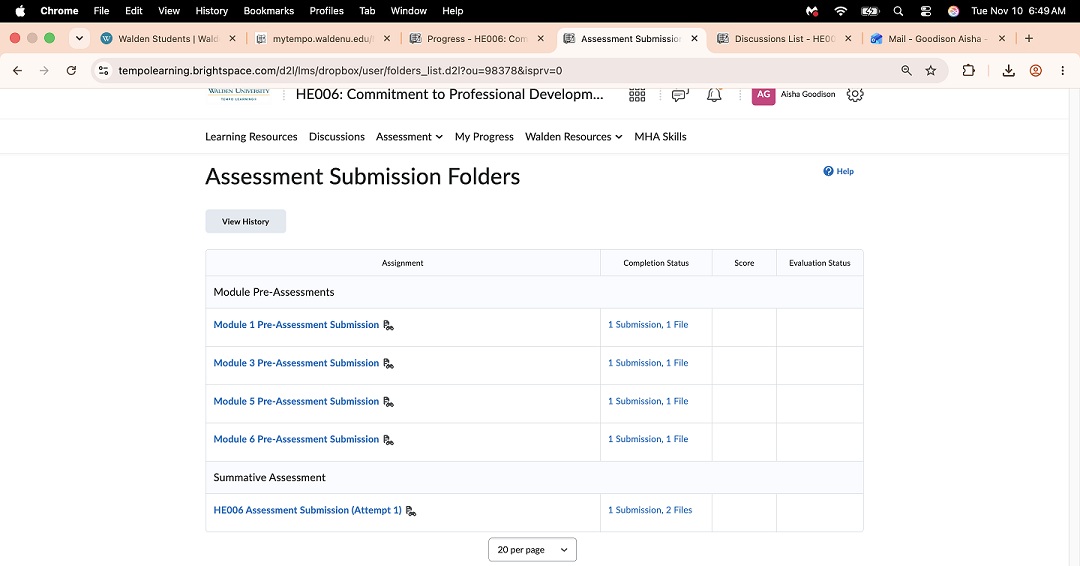
On November 10, 2026 at 5AM I turned
in/uploaded an assignment to Walden University that was 14-pages long, regarding
Artificial Intelligence and Healthcare, to
complete that particular course.The Walden
University computer system accepted my assignment
and time stamped it. I took a screenshot of it
a 6:49AM.
Approximately 3-hours later,
FBI Director Kash
Patel has an article published under his name about
Artificial Intelligence and the FBI
to the Next Gov website, and it completely rips off
my time stamped 14-page academic paper I submitted
to Walden University, and separately the website TurnItin.com,
hours prior to his being uploaded online. Not to
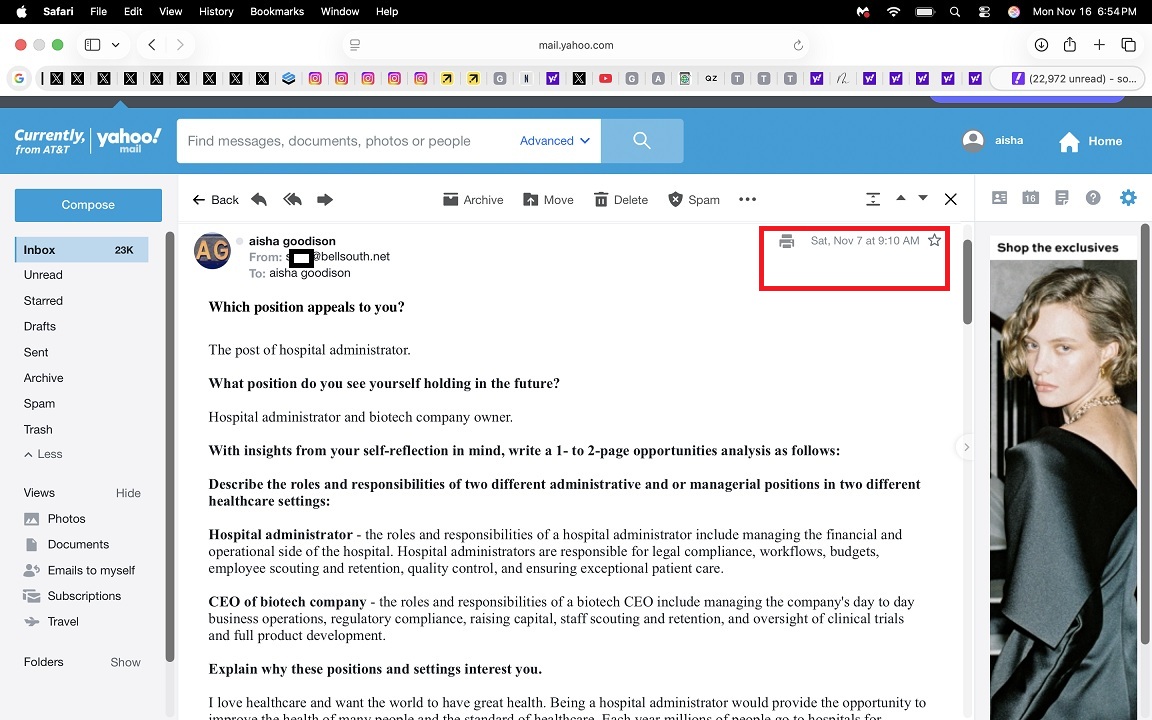
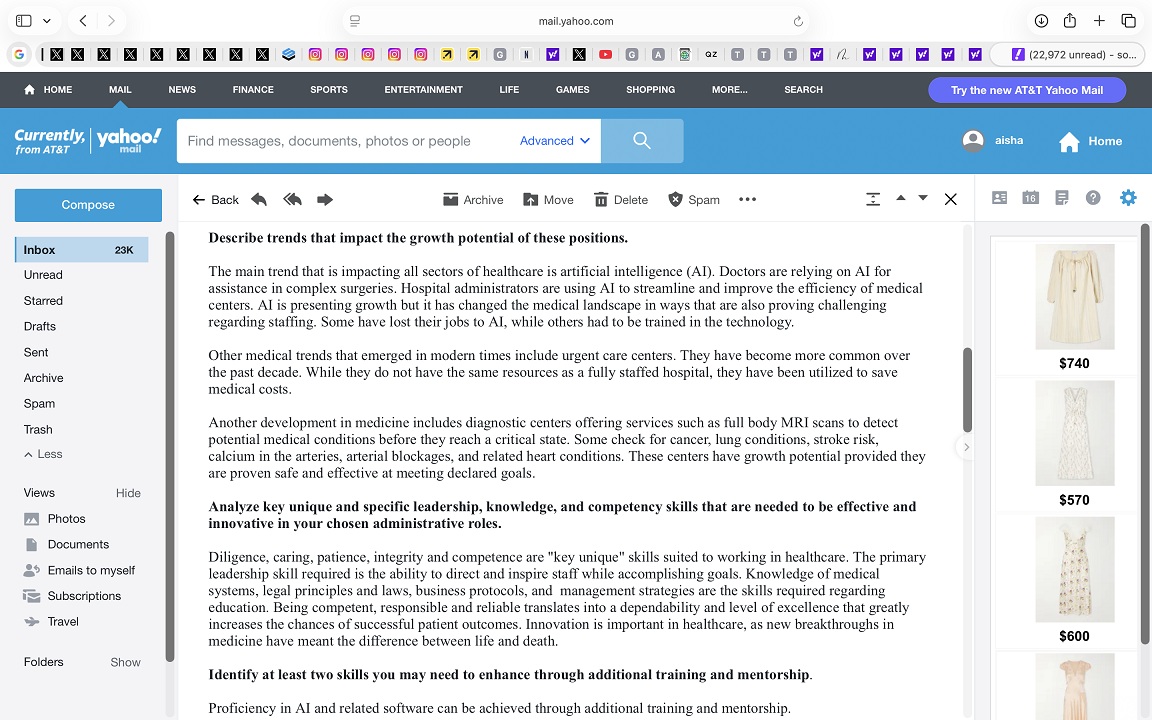
mention, and my "poor man's copyright" email of my
academic paper 3-DAYS PRIOR.
My academic paper was about AI and its
software streamlining work, making it less time
consuming and more efficient in Healthcare. Patel's
article is about
AI and its software streamlining work, making it
less time consuming and more efficient at the FBI.
Part of the assignment was to include an
"audio"
MP3 of a 30-second "elevator speech" about one's
self, which I uploaded to the Walden University site
with my 14-page paper. In Patel's article he is
talking about
audio
from FBI wiretaps.
My article and screencaps are posted first below.
Patel's article is posted below it. Similarities
between my academic paper and his LATER rip off are
highlighted in bold red print:
Lifelong Learning in Healthcare
Administration
Aisha Goodison
Master’s in Healthcare
Administration,
Walden University
HE006: Commitment to Professional Development and
Lifelong Learning
Professor Douglas (Redacted)
November 10, 2026
Lifelong learning in any
profession is a means of maintaining success, competence and relevance. As
Einstein poignantly stated, "The more I learn, the more I realize how much I
don't know." Learning is a lifelong process.
HumanMetrics Personality Assessment
The
HumanMetrics
personality assessment revealed I most fit with the “INFJ - Introverted
iNtuitive Feeling Judging” category. People who bear the INFJ personality model
have a strong "humanitarian" outlook and are "dreamers." I do concur with this
assessment. Caring for
humanity
is the most fundamentally decent thing an individual can do. Everyone can make a
difference in shaping the world for the better.
I'm also a dreamer as the
assessment states. Creativity and being a visionary can lead to wonderful
inventions, breakthroughs and positive social change. When one has the worldview
that anything is possible, one can achieve much in life. The assessment is also
correct regarding INFJ personality types taking on a "disproportionate amount of
responsibility in the various causes" and even to the point of extreme
tiredness, fatigue and exhaustion. It is due to the fact INFJ are very driven
problem solvers who find it difficult to not help others who are in need.
Strengths and Weaknesses
My strengths are I'm a
hard
worker
with a lot of integrity. In a "management and
leadership" setting, which also
happens to be my Bachelor's degree title, I will go above and beyond, working as
many hours as necessary to get the job done. My integrity means I will not
shortchange the public, take shortcuts or engage in corruption. I believe
organizations
should be honest, have social responsibility, and
adhere to the law in every measure. I've included these strengths, because when
there is strong
leadership with integrity, it sets a great example for other
workers to follow. It sets the tone in the organization and that can lead to
great achievement. I’ve also included these strengths, as there is a social
media trend among some workers to "do the bare minimum" on the job, whereas I
believe in excellence and giving it one’s all.
Personal and Professional Weaknesses
My main goals regarding self-improvement are in
reference to expanding my education. There is so much to learn and new
discoveries are constantly being made. There is a continuous
stream of
developments in healthcare, such as medical breakthroughs, new
technology,
recalls, regulatory changes, and revisions to existing laws that one must keep
abreast of in order to provide the best possible care to patients. College
degrees and certifications, annual medical and business seminars, and
subscription services to journals, provide great opportunities to help one
improve and strengthen skills. The most accomplished doctors and nurses, with
decades of experience, still attend seminars regarding developments in medicine.
Many top business executives, with decades of experience under their belts,
attend seminars to network and learn more about emerging trends.
Barriers That Are A Point Of Concern
I welcome most challenges,
as long as they are ethical. I'm not afraid of change or
hard work.
However, barriers that keep people from achieving what they want could be
external forces such as sexism and racism. There are many lawsuits in the court
system
where women and minorities have sued regarding
demonstrable
cases
of sexism and or racism. Things that were said and
done that were not of an ethical nature, and other matters such as unequal pay
based on sex or race, among other discriminatory factors, are barriers to
success. Personal commitments can also be barriers. The barriers that are of
most concern for me have arrived in the form of competitors, regarding a small
business I founded. Some in business do not follow the law and target smaller
companies for their assets and emerging tech. This has proven problematic for a
number of smaller companies, as seen in court
cases.
It is also the reason America has antitrust laws; to prevent unscrupulous
conglomerates from stifling innovation, creativity and competition in the
marketplace.
Most Desired Job Post
The post of hospital administrator appeals to me. I can
envision myself as a hospital administrator and biotech company owner. Running a
hospital at very efficient and effective levels would be a dream come true for
me. Innovating medicine and hospitals are a goal of mine and one that I work on
often. Introducing breakthroughs as a biotech company owner fits within that
dream and most appeals to me.
Hospitals And The Biotech Industry
The roles and
responsibilities of a hospital administrator include managing the financial and
operational
sides of the hospital. Hospital administrators are
responsible for legal compliance, workflows, budgets, employee scouting and
retention, quality control, and ensuring exceptional patient care. The roles and
responsibilities of a biotech CEO include managing the company's day-to-day
business
operations,
regulatory compliance, raising capital, staff scouting and retention, and
oversight of clinical trials and full product development.
I love healthcare and want
the world to have great health. Being a hospital administrator would provide the
opportunity to improve the health of many people and the standard of healthcare.
Each year millions of people go to hospitals for inpatient and outpatient care.
This is an opportunity to improve the health of the general public and
potentially change their lives for the better in giving them a different
perspective on healthcare.
Leading a successful
biotech company is a great opportunity to bring better health to billions of
people. This can be achieved through pharmaceutical
drug
breakthroughs and innovative medical equipment.
Upgrading medical procedures using robotics and AI creates a three-pronged
approach.
Product quality and affordability are essential.
Reaching nations where there exists medical scarcity regarding medications and
suitable facilities such as hospitals and clinics, can also be facilitated
through a
capable
and reliable biotech company.
Trends and Growth
The main trend that is
impacting all sectors of healthcare is artificial intelligence (AI). Doctors are
relying on AI for assistance in complex surgeries. Hospital administrators are
using AI to streamline and improve the efficiency of medical centers. AI is
presenting growth but it has changed the medical landscape in ways that are also
proving challenging regarding staffing. Some workers have lost their jobs to AI
when their posts were eliminated, while others had to be trained in the
technology.
Other medical trends that
emerged in modern times include urgent care
centers.
They have become more common over the past decade. While they do not have the
same resources as a fully staffed hospital, they have been utilized to save
medical costs. Another development in medicine includes diagnostic
centers
offering services such as full body MRI scans to
detect potential medical conditions before they reach a critical state. Some
check for cancer, lung conditions, stroke risk, calcium in the arteries,
arterial blockages, and related heart conditions. These
centers
have growth potential provided they are proven
safe
and effective at meeting declared goals, and in line
with regulatory standards.
Key, Unique and Specific
Leadership, Knowledge,
and Competency Skills
Diligence, caring, patience, integrity and competence
are “key unique" skills suited to working in healthcare. The primary
leadership
skill required is the ability to direct and inspire staff while accomplishing
goals. Knowledge of medical
systems,
legal principles and laws, business protocols, and management
strategies
are the skills required regarding education. Being
competent, responsible and reliable translates into a dependability and level of
excellence that greatly increases the chances of successful patient outcomes.
Innovation is important in healthcare, as new breakthroughs in medicine have
meant the difference between life and death.
Proficiency in AI and related software can be
achieved through additional training. This is one of
my goals. While I have a strong understanding of AI,
it can be expanded.
Locating a mentor to give me additional training in
healthcare
administration
could improve my understanding of the industry, and
how to handle the pressurized situations that could
arise in a
fast paced
hospital.
Engaging in team building
exercises with colleagues that strengthen our healthcare skills and cohesiveness
is important. Engaging in problem solving and decision making exercises using
proven methods and procedures for the best outcomes and resolutions is useful.
Attending
leadership seminars to hone my skills is vital. Joining peer networks
to learn of concerns in the healthcare
field
provides feedback.
Professional Organizations
If I were given the opportunity to join two
professional organizations it would be (REDACTED ONLINE FOR PRIVACY REASONS). It
would present me with the opportunity to work in a hospital setting in an area
that serves many people in my home country. (REDACTED ONLINE FOR PRIVACY
REASONS), serves low or no income individuals who need healthcare. I’m of the
belief I could make a real difference in their organization, utilizing the
things I've learned about medicine and science via my college degrees, and
experiences. I would also join the (REDACTED) part time, as it is a highly
reputable (REDACTED ONLINE FOR PRIVACY REASONS), where one could work as a
(REDACTED ONLINE FOR PRIVACY REASONS). It is important to impart wisdom to the
next generation and give them a solid foundation in education. It would provide
me with a great sense of satisfaction to assist those in need at (REDACTED
ONLINE FOR PRIVACY REASONS), and to help shape the minds of students at the
university, via solid educational principles and established teachings.
Enhancing Professional Career Opportunities
My professional goals largely concern my own company. I
author copyrights and patents, some of which are in healthcare and science. I
hope to fully immerse myself in this passion in the future. It is a pressing
professional goal that I develop my company to its full potential, as I know it
will be of great benefit to society.
Under my first two college
degrees I studied biology, chemistry,
human
growth and development (conception, birth, death,
and diseases) psychology which included anatomy, and a host of additional
psychology classes that taught about disease, diagnosis and medical treatments.
However, I would like to take more college level certificate courses in biology
and chemistry, as well as epidemiology, etiology, pathology, and pharmacology.
I'm of the belief these courses would enhance my education and be very
rewarding, as I love medicine and science. Expanding one's educational résumé
can lead to greater opportunities in the
workforce
and global marketplace.
A second measurable step
would be an internship at a stable and respected company in healthcare. Hands on
experience where one is in the healthcare environment can provide real world
experience. Dealing with
crisis
and emergencies in an actual setting can better
prepare one for the future. Learning under the tutelage of highly trained and
experienced people in healthcare is an invaluable learning experience.
Career Goals in the Dynamic Healthcare
Environment
My career goal of expanding my small science company
where I author copyrights and patents, fits within the "dynamic healthcare
environment,” and my master's degree
program at Walden is teaching me a
significant amount about healthcare
administration.
I love medicine and science. I see it as a conduit to reshaping global medical
and science practices, including producing groundbreaking breakthroughs that
better
humanity
and
human
health. I'm a strong proponent of social and
environmental responsibility, regarding society acting in a conscientious manner
to clean up and preserve our planet. I'm also a lover of the arts, as creativity
nourishes the soul and expands the mind.
I currently work with the
disabled for a company in the healthcare sector. I've learned so much about the
disabled, healthcare and social
programs regarding disability. I've learned
government procedures and protocols in caring for the disabled. I would like to
work full time within my own company that also encompasses healthcare, regarding
science and medical patents. Community
programs I could engage in would be
attending healthcare outreach
programs, where members of the public can receive
free health screenings from medical doctors and nurses, and receive information
on steps to become healthier. Working in a healthcare booth at free public
health events is a great opportunity to help the public and meet new people.
The managerial and
leadership skills I need to enhance are learning more from great leaders of the
past and applying it to my own career. I do read inspirational materials from
proven leaders in medicine, science and business. I could draw more from their
experiences to enhance my managerial and
leadership skills. My rationale for the
skills is there are set procedures to follow in running a healthcare
organization at optimal levels, which includes precision, insightfulness,
measured actions, and being meticulous regarding patient care. Leaning on the
examples and experiences of great, accomplished people in the
field
will assist in teaching me what is most beneficial
to an organization.
Elevator Speech
click
here for assigned "30 second"
audio
Table
(REDACTED ONLINE FOR PRIVACY REASONS)
References
Alami, H., Rivard, L., Lehoux, P., Ag Ahmed, M. A.,
Soubra, R., Rouquet, R., Fleet, R., & Fortin, J.-P. (2025). Conflicts and
complexities around intellectual property and value sharing of
artificial intelligence
healthcare
solutions
in public-private partnerships: A qualitative study.
SSM - Health Systems, 5.
https://doi.org/10.1016/j.ssmhs.2025.100093
Bedenik, T., Fennelly, O., & Bennett, K. (2026). AI in neurological health care:
Qualitative study of patient and public perceptions. Journal of Medical Internet
Research, 28(1).
https://doi.org/10.2196/87806
Bobak, A., Vivsyannyk, O., Khanina, O., Kazarian, A., & Dmytrenko, I. (2026).
Public administration in the healthcare system: Prospects for modernization.
Espacio Abierto. Cuaderno Venezolano de Sociología, 35(4), 50–70.
https://doi.org/10.5281/zenodo.21315285
Eastwood, B. (2026, January 22). AI in Healthcare Administration: A Complete
Overview. Health Tech Magazine.
https://healthtechmagazine.net/article/2026/01/ai-healthcare-administration-complete-overview-perfcon
Kumaran, U. (2023). AI Is Taking Over Healthcare Administration. Brain Forge.
https://brainforge.ai/blog/ai-in-healthcare-administration/
Shalko, M., Lavruk, A., Babiak, О., Zinchenko, V., Melnyk, D., & Khanina, О.
(2023). Digital decision-making tools in the field of public administration of
healthcare. Financial and Credit Activity: Problems of Theory and Practice,
6(53), 528–540.
https://doi.org/10.55643/fcaptp.6.53.2023.4211
Veresniuk, N., Lavrentii, D., Monastyrskyi, G., Demchyshyn, Y., & Levytska, Y.
(2025). Reforming Healthcare: Challenges in Public Administration and System
Overhaul. Transatlantic Policy Quarterly, 23(4), 26–37.
https://doi.org/10.58867/YEUV9337
Zhao Zhenyi. (2025). Global trends in the use of information technologies in
healthcare. Публічне Управління Та Регіональний Розвиток, 30, 1318–1338.
https://doi.org/10.34132/pard2025.30.10
Here is one of my screencaps of
where I uploaded the 14-page assignment to the
Walden University site via my account at the school.
The time stamp at the top right shows November 10,
2026 at 6:49 AM. Patel published his rip off hours
later to the Next Gov site.
Here are two screencaps of a November 7, 2026 "poor man's
copyright" email I sent to myself (time and date highlighted in red on the
right) that was a rough draft of my original 14-page Walden University academic
paper on AI and technology upgrades, which predates FBI Director Kash Patel's
copyright infringing rip off by 3-DAYS:
Copyright infringing, thieving FBI
Director Kash Patel playing journalist instead of
going out catching criminals, ripped off my 14-page
academic university paper about upgrading technology
and using AI in Healthcare, but made it about
upgrading technology and using AI at the FBI:
The new FBI: Better
technology
to meet the
mission
By Kash Patel, Director, Federal
Bureau of Investigation
NOVEMBER 10, 2026
COMMENTARY. FBI Director Kash Patel outlines how the
Bureau has upgraded its
technology
capabilities. FBI
IT MODERNIZATION ARTIFICIAL INTELLIGENCE.
Of this FBI’s many historic successes over the
last 21 months of the Trump
Administration, perhaps
our most consequential has been our complete
overhaul in
technology capabilities. For too long,
outdated technology and bureaucratic processes
slowed the Bureau's ability to deliver results.
Those days are over.
Through adoption of Digital Automation
Solutions
and Superintelligence
— which this FBI has increased by 605% — across the Bureau, we are on a
course to save nearly 640,000 labor hours, the equivalent of about 79,000
workdays.
Our SI
program began by listening to the people doing the
work. Through
our SI Champions
Program and Task Force, we started collecting success
stories from across the
field, and early results have been tremendous. In
the past 90 days alone, users of our
programs report saving an estimated
829 hours, about 104 workdays, by automating transcription, accelerating
translation, reducing data triage and
streamlining jail call review. If
that pace holds, every year these use
cases alone will return more than
3,300 hours, or over 413 workdays.
These are much bigger than numbers — they are
cases
that matter to the
American people. For example, in San Antonio, during multiple
investigations of human
trafficking,
drug
trafficking, fraud and money
laundering — one wiretap alone produced more than 1,900 sessions of
poor-quality
audio. SI transcription saved roughly 633 hours of manual
work.
More importantly, in one specific case, the time saved allowed agents to
move quickly enough to help rescue a trafficking victim and return the
victim
safely to their family. In another case out of Mobile, analysis of
jail calls in threat
cases
used to take months. With SI transcription and
summarization, processing time for non-priority calls fell from about ten
minutes to about two — in this case, ultimately contributing to four
arrests.
Our Digital Automation Solutions
program uses
software bots to handle
repetitive, transaction-based computer tasks, freeing people for
analytical work that requires human
judgment. 29 offices across the Bureau
have deployed automations.
As of October, we have
fielded more than 121 of them, connected to dozens
of existing FBI applications, saving over 635,000 labor hours. One
specific automation helps our
Human
Resources Division enter benefits data
for new employees, saving about 1,275 hours a year and giving new hires a
more efficient transition.
Hippo Chat, the FBI’s new SI chatbot built directly into our
systems,
reduces
administrative
workload associated with file reviews and other
evaluations. It synthesizes large quantities of documents, like large
search warrant returns, into a readable format with the relevant
information — reviewing thousands of photos at one time, organizing them
into a spreadsheet for easy triage by
cases
agents and analysts and more.
We’ve also introduced Microsoft CoPilot Chat, our first enterprise
AI
assistant focused on the
administrative
side of the Bureau, and ‘AJae,’
our inaugural platform for analyzing case data across all violations and
data types. These apps free up thousands of critical hours per year for
our agents and intelligence analysts in the
field.
None of this would be possible without our private sector partners and
their cutting-edge integration to advance our
mission capabilities
— marking the most wide-ranging and
impactful
partnerships for technology
in Bureau history.
The FBI just launched our new elevated ‘Cyber Branch,’ bringing all
cybersecurity
operations
at the FBI under one
leadership
chain —
consolidating all offensive and defensive cyber
operations, eliminating
redundant work and technical risk and ensuring we are developing robust
cyber capabilities for the entire FBI. We’re evolving how we do business
to better meet the demands of the dynamic threat
landscape
and provide
better resources for the agents, analysts and professional staff
working
hard
in the
field. This will greatly accelerate our work to ensure the FBI
maintains the strongest cyber infrastructure in the world.
This FBI has also totally rebuilt our Headquarters’
operational
command
and control
center, standing up the first ever ‘Director’s
Strategic
Information Group’ (DSIG) with a focus on real-time situational awareness,
rapid validation and decision-quality products
in fast-moving
crises
and
sensitive
operational
matters. This produces a time-to-first executive
product in 20 minutes, compared to the hours it took under the former
‘Strategic Information and
Operations
Center’ (SIOC) system.
This is the technology that has strongly contributed to the most prolific
reduction in violent crime in American history: 71,650 violent crime
arrests, a 114% increase compared to the final 21 months of the previous
administration; 4,616 kilograms of deadly
drugs
seized, up 32%, including
enough fentanyl to potentially kill more than 350 million Americans; 5,801
child victims identified or located, up 25%; 6,744 arrests tied to foreign
terrorist
organizations, an increase of 1,057%; ten fugitives from the
FBI’s Ten Most Wanted Fugitives list arrested, including alleged
murderers, rapists and other violent criminals — 2.5 times the number
arrested during the previous four years combined — and so much more.
The principle is simple: Technology should serve the mission, allowing our
people to better serve Americans. Every hour we return to our
workforce
is
an hour for the work only they can do: crushing violent crime, defending
the homeland, protecting victims and stopping threats before they reach
our communities. Mission First.
https://www.nextgov.com
|
|

 |
 |
 |
 |
 |
